Citing security considerations, the system requirements for Windows 11 were increased over Windows 10. While the OS can be installed on unsupported processors, Microsoft does not guarantee the availability of updates. Windows 11 also drops support for 32-bit x86 CPUs and devices which use BIOS firmware. Original equipment manufacturers can still ship computers without a TPM 2.0 coprocessor upon Microsoft's approval. Some third-party software may refuse to run on unsupported configurations of Windows 11. If the device does not have a TPM chip or Secure Boot, installing Windows 11 with different workarounds is still possible.

At the time of its unveiling, Microsoft announced there were a few key minimum requirements for running Windows 11. These include a compatible 64-bit processor, 4GB of RAM, 64GB of storage, UEFI secure boot, certain graphics requirements, and TPM 2.0. This caused a bit of a stir as CPUs older than late 2017 were not supported; and to run Windows 11, users would have to upgrade their still fairly capable CPUs. Now, though the company is sticking with the aforementioned requirements, it has added a few more Intel CPUs to its compatibility list after testing with Windows Insiders and OEMs. At least 16GB of RAM The basic system requirements of Windows 11 differ significantly from Windows 10.
Windows 11 Without Minimum Requirements Windows 11 only supports 64-bit systems such as those using an x86-64 or ARM64 processor; IA-32 processors are no longer supported. Thus, Windows 11 is the first ever consumer version of Windows not to support 32-bit processors and 16-bit software . The minimum RAM and storage requirements were also increased; Windows 11 now requires at least 4GB of RAM and 64GB of storage. S mode is only supported for the Home edition of Windows 11.

The compatibility list includes the Intel Core i7-7820HQ, a seventh-generation processor used by the Surface Studio 2, although only on devices that shipped with DCH-based drivers. As part of the minimum system requirements, Windows 11 only runs on devices with a Trusted Platform Module 2.0 security coprocessor. According to Microsoft, the TPM 2.0 coprocessor is a "critical building block" for protection against firmware and hardware attacks. In addition, Microsoft now requires devices with Windows 11 to include virtualization-based security , hypervisor-protected code integrity , and Secure Boot built-in and enabled by default.
The operating system also features hardware-enforced stack protection for supported Intel and AMD processors for protection against zero-day exploits. Microsoft released the final Windows 11 build earlier this week, after several months of beta testing the new operating system. Windows 10 users who qualify for the upgrade can jump to Windows 11 right away.

That's because Windows 11 has strict hardware requirements in place that caused quite an uproar over the summer. Microsoft found itself having to explain time and again why not all Windows 10 devices can upgrade. Eventually, it relented and made it possible for unsupported PCs to install Windows 11, with some huge caveats. And now, the company provides detailed instructions on how to bypass the Windows 11 hardware restrictions.
For the first time in many years Microsoft increased the minimum system requirements for its latest operating system, Windows 11. While this is always controversial, this time around it certainly generated a lot of noise as the new requirements instantly made a big chunk of Windows 10 compatible computers ineligible for the latest version of Windows. The good news is that despite the often confusing messaging on the topic coming from Microsoft, it is possible to install Windows 11 on just about any 64-bit devices that is compatible with Windows 10. Microsoft notes that you should verify your device meets minimum requirements before you boot from media.

That's because you'll be able to install Windows 11 if you have TPM 1.2, but the process will not check whether your processor is on the supported list or not. This note concerns Windows 10 users who want to bypass the restrictions. There are several ways available to install Windows 11 after bypassing minimum hardware requirements. You can modify the Windows 11 bootable ISO that automatically neglects system requirements. Create a Windows 11 bootable USB flash drive and then ignore TPM 2.0 and Secure Boot. Even the popular software Rufus has now enabled the support to bypass TPM, Secure Boot, and RAM checks in bootable Windows 11 USB drive.

As we release to Windows Insiders and partner with our OEMs, we will test to identify devices running on Intel 7th generation and AMD Zen 1 that may meet our principles. We're committed to sharing updates with you on the results of our testing over time, as well as sharing additional technical blogs. With Windows 11, we are focused on increasing security, improving reliability, and ensuring compatibility. Cunningham concluded that "as I've dug into and learned its ins and outs for this review, I've warmed to it more", but argued that the OS was facing similar "public perception" issues to Windows Vista and Windows 8.
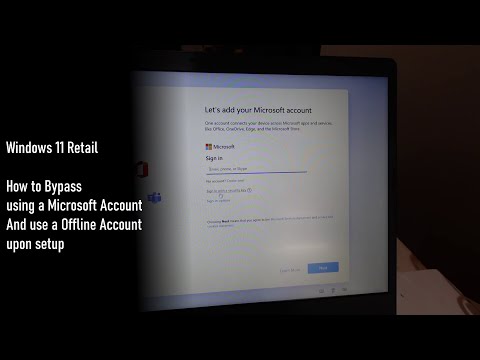
Users can download the Windows 11 ISO, which is the official disk image released by Microsoft that can be burned to a DVD or, more popularly, used to create a bootable thumb drive that can be used to install Windows 11. After creating one using the image downloaded from the Windows 11 installation media site, users can install Windows 11 manually on their PC. However, it is worth noting that users will not be eligible to receive Windows Updates if they take this route, and will probably have to manually install Windows updates using the ISO method in the future.
According to Microsoft, "Your device might malfunction due to these compatibility or other issues. Windows 11 ISO download page, you will need to select the first option called Windows 11 Installation Assistant. This is the best option to assess the minimum system requirement before upgrading to Windows 11. Once registry entries are in place on your Windows 10 device, the Windows11InstallationAssistance.exe tool skips the check for TPM 2.0 and CPU versions. This helps us to install Windows 11 on unsupported hardware.
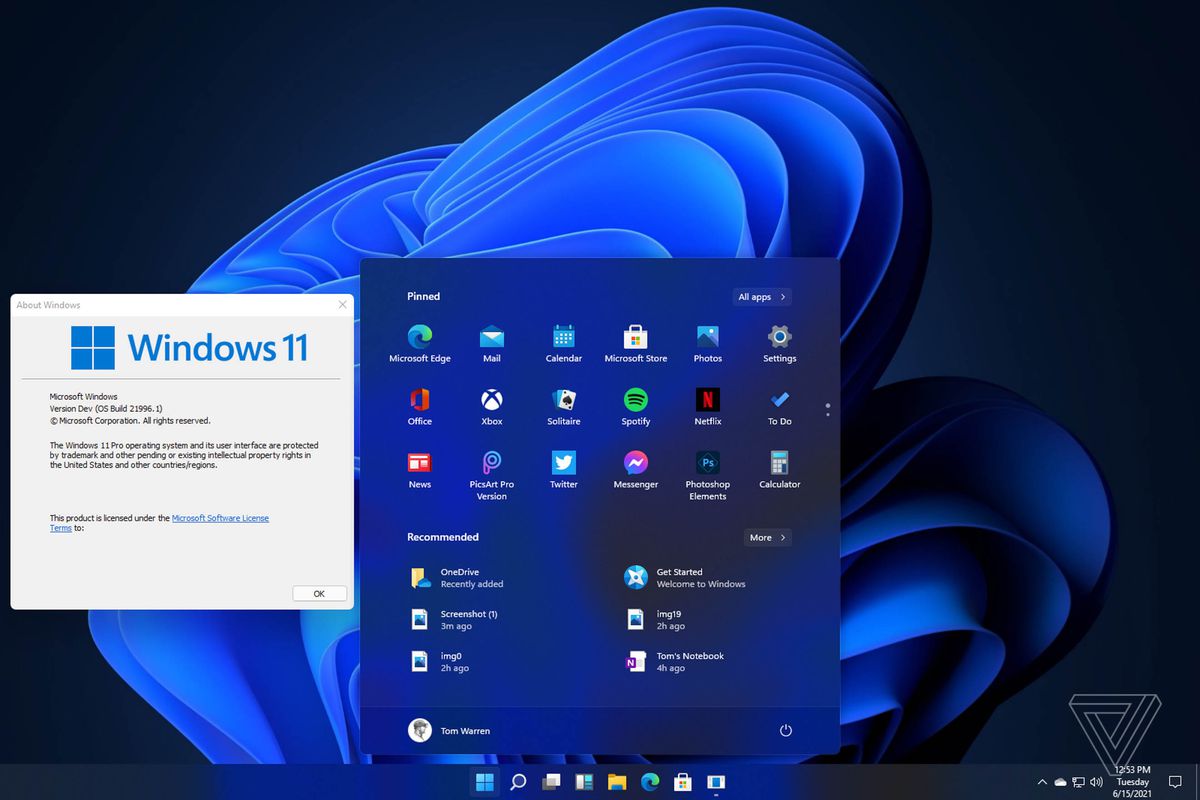
While some users have been trying out Windows 11 via the Windows Insider Program Microsoft has been using that data to expand the list of compatible processors. That list was updated recently to include Intel Core X-series, Xeon W-series and Intel Core 7820HQ CPUs. So it's clear that Microsoft is still testing to ensure as many machines as possible work with the new operating system and it's worth keeping an eye on the long list of supported devices. Warren noted that he rarely used the Widgets panel or Microsoft Teams, citing that he preferred the weather display that later versions of Windows 10 offered, and didn't use Teams to communicate with his friends and family. He also acknowledged the expansion of Microsoft Store to include more "traditional" desktop applications. Overall, he concluded that "I wouldn't rush out to upgrade to Windows 11, but I also wouldn't avoid it. After all, Windows 11 still feels familiar and underneath all the UI changes, it's the same Windows we've had for decades."
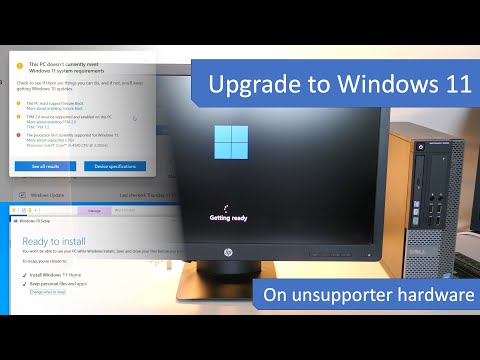
Typically, there are no significant changes in hardware requirements from version to version. Windows 11 has significantly increased the system requirements compared to previous versions of Windows. As per the tech giant, unsupported hardware may experience more Blue Screen of Death errors than devices that meet the requirements. Microsoft is promising a 99.8% crash-free experience for supported hardware, thanks to the new drivers and modern driver update management. Windows 10 is a perfectly fine operating system, but if you choose to install Windows 11 on an unsupported PC, you may not receive security updates from the company. In a new support document, Microsoft confirmed that devices failing to meet these requirements will not be guaranteed to receive updates.
Navigate to the downloaded Windows 11 ISO file, and select it. Rufus will populate the rest of the settings, which you have to change according to your system of choice.Under the Image Options label, select Extended Windows 11 in installation (no TPM / no Secure Boot). You should see the Target System label reflect your BIOS Mode as you switch the Partition Scheme.If you have a rather old 64-bit system you're attempting this on, check the Add fixes for old BIOSes option.

Your final Rufus screen should look something like this. Microsoft is announcing that it won't block people from installing Windows 11 on most older PCs. This means anyone with a PC with an older CPU that doesn't officially pass the upgrade test can still go ahead and download an ISO file of Windows 11 and install the OS manually. This PC doesn't currently meet all the system requirements for Windows 11 – Windows 11 Upgrade RequirementsWindows 11 Upgrade Support is announced for the following processors.

These processors were not included in the initial list of supported processors for Windows 11. The PC Health tool is not updated with the latest list of supported processors. I think Microsoft is nearing the release of Windows 11 into the production ring, and that is why they are ramping up all the insider build versions.

Also, Microsoft shared the updated requirements for Windows 11 upgrade. You can download the insider version of the PC health check tool. For most users with incompatible hardware, it is best to simply remain on Windows 10 instead of trying to install the OS on an unsupported computer. Installing updates on these unsupported PCs can be a hassle, and most users will want a seamless solution for computers that they use on a daily basis. Windows 11 has arrived, with Microsoft's latest update showing up on users' computers and laptops today. The free upgrade to Windows 10 which is now available for users who have compatible hardware, will offer a stable and secure experience for users who opt for a Windows 11 update.

However, millions of PCs around the world will not be able to run Windows 11, due to the stringent new hardware requirements that include newer processors from Intel, AMD and Qualcomm. Importantly, if you're one of the many users who has seen the message informing you that your PC is not compatible with Windows 11, you still have a few options left. However, Microsoft advises against using the above trick and installing Windows 11 on non-compatible machines. In another support article Installing Windows 11 on devices that don't meet minimum system requirements, Microsoft addresses this aspect. Most of the computers currently available in companies do not meet the minimum requirements that Microsoft has made a condition for Windows 11. This is the result of initial analyses on the US market.
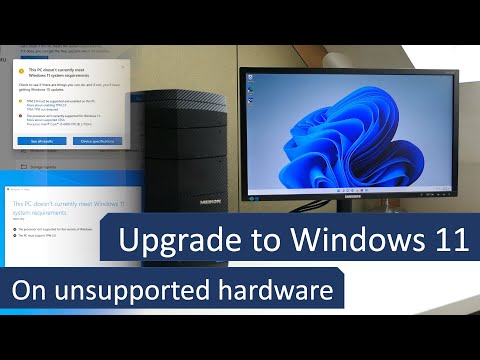
Microsoft has now revealed a way to bypass the check for TPM 2.0 support and CPU compatibility during Windows 11 setup. The tool is back and is now significantly improved, and if it detects any incompatibilities with your PC, it will list them individually. But you can also prepare for an upgrade to Windows 11 by checking your PC's hardware and software capabilities by hand. This approach is especially helpful if you've got a home-built PC that may have a Trusted Platform Module installed, but not enabled. So grab your current PC's specs and follow along as we go over the extensive lists of requirements that Microsoft has published. This will allow Windows 11 to be installed on any computer, including the Virtual Machines which also need the base computer to have TPM 2.0 to install Windows 11.

To check for Windows 11 compatibility, download and run the PC Health Check app, which will identify specific compatibility issues that prevent an upgrade. Older hardware is less likely to pass Windows 11's stringent compatibility checks; for example, most Intel 7th Generation Core processors are not on the list of compatible CPUs, nor are PCs built using AMD Zen 1 processors. PCs purchased in 2016 or earlier are almost certain to be unsupported. Microsoft also details how it arrived at these minimum system requirements for Windows 11.
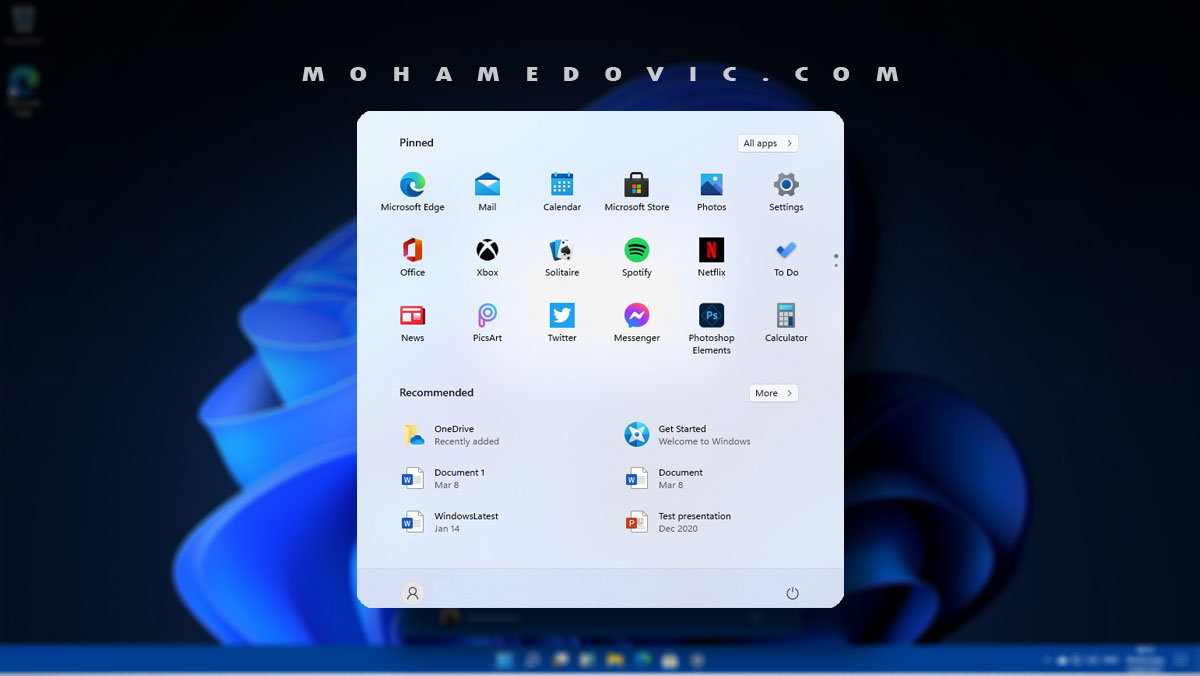
Microsoft wants to push Windows toward modern DCH drivers and modern security with Trusted Platform Module support and virtualization-based security . Knowing that some users will want to install Windows 11 on systems that don't meet all of its hardware requirements, Microsoft has provided a registry hack that loosens them up somewhat. Using this hack, you can install on a system that has at least TPM 1.2 and has an unsupported CPU. That said, we recommend the scripts above because they don't require you to have TPM of any kind.

– If you upgrade the operating system to Windows 11 on an unsupported device, there are risks that Microsoft documented. Your device might malfunction due to these compatibility or other issues. Devices that do not meet these system requirements will no longer be guaranteed to receive updates . Legacy BIOS is no longer supported; a UEFI system with Secure Boot and a Trusted Platform Module 2.0 security coprocessor is now required.
The TPM requirement in particular has led to confusion as many motherboards do not have TPM support, or require a compatible TPM to be physically installed onto the motherboard. Internet Explorer has been replaced by the Chromium-based Microsoft Edge as the default web browser, and Microsoft Teams is integrated into the Windows shell. Microsoft also announced plans to allow more flexibility in software that can be distributed via Microsoft Store, and to support Android apps on Windows 11 . On October 5, 2021, Windows 11 official version was released. Now you need to look at these details carefully so that you can either update or upgrade to these Win11 System requirements in order to run it smoothly. Even after having all these system requirements, your PC has errors for installing windows 11 then install the PC health check App tool from the Microsoft website.

It will help you to look for unresolved issues with your PC and give you a pop-up about the bugs and errors. Users can also try and install Windows 11 on a virtual machine using software like Virtualbox or VMWare which will allow them to try out Windows 11 on their existing computer. However, with the increased system requirements for Windows 11 and requirements for TPM 2.0 support, your mileage may vary and you might not be able to install Windows 11 on a virtual machine successfully. Even once installed, you might run into issues with the operating system that will likely never receive fixes from Microsoft as Windows 11 is installed on unsupported hardware. Although Microsoft has already revealed a walkaround to bypass the TPM 2.0 and processor requirements, the company has also warned users against installing the operating system on unsupported devices. If this is your only problem, one easier way would be to perform a clean install.

First, be sure to back up your files (we recommend backing up your files before upgrading anyway.) Then, use Microsoft's Media Creation Tool to create bootable Windows 11 installation media on a USB drive or DVD. Now, use the installation media to perform a clean installation of Windows 11, wiping your drive—you may have to put your computer's firmware into UEFI mode first. Windows 11 will erase your Windows 10 system and set up your drive in GPT mode. Windows 11 doesn't have any huge features that make it a must-upgrade, and Microsoft warns that unsupported PCs may experience bugs. In fact, Microsoft warns that it may eventually stop providing security updates for unsupported PCs running Windows 11. Microsoft has published another support article Ways to install Windows 11, parallel to the release of Windows 11.
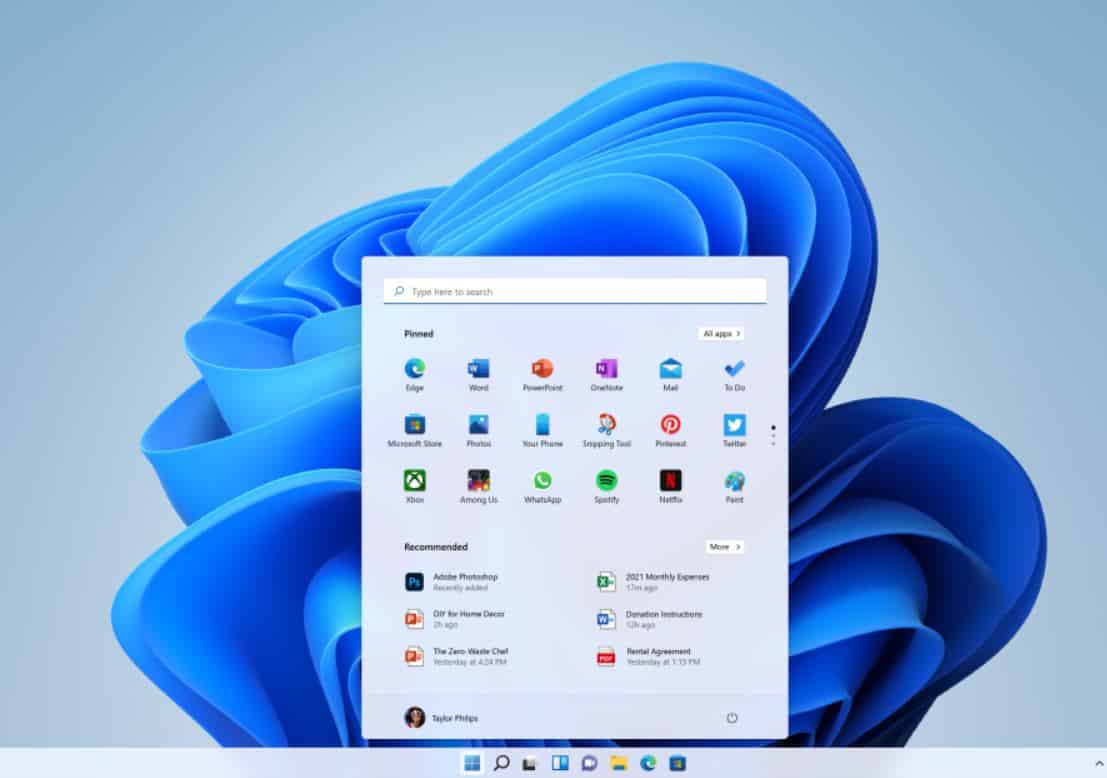
Even though Windows 11 can work on most unsupported PC, this doesn't mean it will work perfectly. Depending on the PC, some of the features may not work correctly, or Windows may corrupt or malfunction. Microsoft also doesn't recommend installing Windows 11 on unsupported devices, and there is no guarantee such devices will receive all future updates. Security.Windows 11 raises the bar for security by requiring hardware that can enable protections like Windows Hello, Device Encryption, virtualization-based security , hypervisor-protected code integrity and Secure Boot.

The combination of these features has been shown toreduce malware by 60%on tested devices. To meet the principle, all Windows 11 supported CPUs have an embedded TPM, support secure boot, and support VBS and specificVBS capabilities. You can use the Microsoft PC Health Check app to confirm whether your computer meets the minimum requirements. If the system configuration isn't compatible, the app will also show you details of the components that are not compatible. This information will help you determine steps to resolve the problem or whether it's time to upgrade the device.
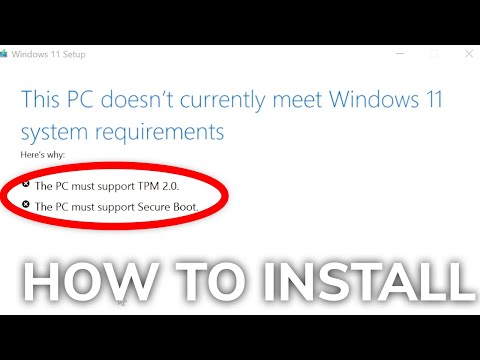
As early as August, Microsoft disclosed the minimum system requirements for running Windows 11. Now that Microsoft has released Windows 11, they've also published information that describes how to bypass the TPM 2.0 and CPU requirements to install Windows 11. These steps will work if you currently have Windows 10 installed and want to do an upgrade to Windows 11. Please note that you still need to meet other minimum requirements which include TPM 1.2, 4GB RAM, and 64GB of storage.

While Microsoft continues to allow methods for installing Windows 11 on hardware that doesn't meet the minimum requirements, the company wants users to know that there could be some major downsides of doing this. The rest of the process is just like any regular old bootable USB installation. Attach the USB drive to the system you want to upgrade to Windows 11, and boot it up.

You can now boot into the Windows 11 bootable USB by bringing up your Boot device menu by pressing the boot options key specific to your system. It's usually the Delete key or one of the function keys. You can look up the key binding specific to your system. Once the boot device menu shows up, select the USB drive, and follow the Windows 11 installation setup.


No comments:
Post a Comment
Note: Only a member of this blog may post a comment.